Showing posts sorted by relevance for query hard rock. Sort by date Show all posts

20060907

Granicus (1973)

Allmusic:

"Cleveland's enigmatic Granicus recorded just one eponymous LP before fading into rock & roll oblivion, but boy, it's an absolute gem! Quietly released by RCA in 1973, Granicus is truly an album out of time -- especially its own -- which perhaps explains its eventual commercial failure. Years on, the record acts as a veritable time capsule, taking the listener back to that tenuous transition point where late-'60s progressive rock and experimental psychedelia finally gave way once and for all to what is now considered the classic '70s hard rock sound. Indeed, it's this convoluted transformation process that simultaneously informs the album with its edgy, nervous energy and helps explain its mysteriously lasting appeal. Elements of the old ways pervade the wistful interlude "Twilight," the prog-tastic "Nightmare," and the 11-minute freakout "Prayer," while ballsy hard rockers like "You're in America" and "When You're Movin'" reflect the new world order imposed by the church of Led Zeppelin. Somewhere in between, an optimum balance is struck by excellent single "Bad Talk," the scorching, self-affirming tirade of "Cleveland Ohio" (where singer Woody Leffel scats his way through every insult ever aimed at his hometown's citizens: "Uncool, unheavy, ungroovy, unfunky, unhip, greaseball!"), and the amazing hard boogie workout that is closer "Paradise." As for the bandmembers, their technical prowess and taut interplay drives all of the above into truly impressive realms of inspiration, and with his piercing shrieks and bluesy falsetto, Leffel is a positively eerie sonic precursor to Rush's Geddy Lee. Rock & roll history may have dealt them a losing hand in the end, but there'll always be a place in musical anthropologists' hearts for both Granicus the band and Granicus the album."

HeadHeritage:

"When I first heard about Granicus, I knew instinctively that they HAD to be from the Midwest, and judging from the title of their balls-out charging of the gates of “Cleveland, Ohio”, they were. But from the high contrast photographs of the group kicking it out against a rising sun on the front cover to their anonymity of the back cover (where their faces are entirely airbrushed out for some reason) they could be from any backwater city of the USA in the early seventies. But this album is not your standard hard rock boogie -- it is compelling and expertly cut hard rock of the most unique kind. And adding to its uniqueness is its year of issue (1973), the label it was issued on (RCA), as well as the back cover liner notes, the logo and everything else that screams the sort of packaging you’d expect from an album released on Columbia years later. And in those same liners Holden refers to the “hi-amp speechsong” of Woody Leffel present on just the aforementioned track “Cleveland, Ohio” alone. He is mistaken-- they’re on EVERY track. And they fall short of the stock in trade definitions “pyrotechnics” or “gymnastics” usually tossed about when describing the unusually shrill vocalist of any typical, mediocre hard rock from this time. Because Leffel’s not shrill, and he’s by no means typical -- his skyward-raised head emits ululations beyond orgasmic that verge on the most feminine ever to issue forth from a fully clothed male. And because Granicus emerged chronologically centre of 1970 proto-metal and its descent into dull, chest-beating macho blues-boogie bollocks of the mid/late seventies, they were not an SG-wielding power trio, but an equally powerful five man electrical band of dual Gibson Les Pauls with a locked in rhythm section to boot. And lead guitarist Wayne Anderson lets loose in the most controlled yet ever-swooning manner as his solos run against the crunch of Al Pinell’s simple yet evergreen rhythm guitar throughout." more... (buy it)

http://lix.in/4e0eeb

Granicus - Cleveland, Ohio


20061020

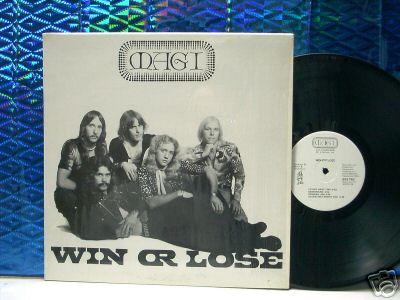
Magi - Win or Lose (1972)

forced exposure:

"This north Indiana outfit ruled the roost in the 'Michiana' region in the mid-'70s, attracting huge crowds whenever they played live. Often compared with Led Zeppelin, this 5-piece outfit rocked the area with a tight and raw sound that combined in-your-face hard rock with undisguised psychedelic tendencies and lashings of fuzz. It must be said the boys didn't do themselves any favours by issuing their only known album with a cover reminiscent of a Journey photo shoot, but regardless of their dubious hair and sense of dress, Magi certainly deserved more than the obscurity into which they ultimately lapsed. Win Or Lose, recorded at Uncle Dirty's Sound Machine studios in Michigan in 1976, and which boasts a series of solid songs propelled by a tight rhythm section and some more-than respectable vocals, is always reviewed enthusiastically."


Tom Stevens Interview via lysergia.com:

Q: What was the teen music/rock scene like in Indiana in the mid-1970s? What major bands and styles were the most influential?

TOM: The last of the local rock and roll "teen dance" scene that started in the early 60s was still alive in the mid-70s. The YMCA-YWCA in Elkhart, Indiana would have dances on Saturday nights, a place called The Electric Circuit in downtown Elkhart (they had walls painted black with day-glo paintings) had bands Friday nights, and every High School (and some Junior High Schools) would have their dances as well. Also, the legal age for alcohol was 18 in Michigan, just a few miles north, so there were lots of bars that had bands, sometimes 6-7 nights each week. That entire scene died by the early 80s, when schools stopped bands and started DJs, and the drinking age in Michigan went to 21.

There were basically three schools of rock bands here in the mid-70s:

1) Pop, or what we called Top 40 bands, that played cover songs that were hits of the day. South Shore was one of the most popular bands of that genre in the area, and they released a 45 called "Do Me Right" that received lots of local airplay on WRBR-FM, and I think they made other 45s, but no LPs. These top 40 bands were possibly the most direct offshoot of the local Fujimo 60s bands like The Tempests and Dukes, but most didn't write their own material or make records.

2) Hard rock bands, influenced by Aerosmith, Alice Cooper, Kiss, Foghat. Magi fell into that category. Kopperfield was another local band in that era that's listed in Fuzz, Acid & Flowers for their album "Tales Untold". Kopperfield crossed the hard rock and progressive genres. I saw them more than once live during that time and I remember thinking they were a very good live act for their style. "Tales Untold" was recorded at Uncle Dirty's Sound Machine in Kalamazoo, Michigan, about 45 miles north of Elkhart, Indiana and the same studio Magi recorded "Win or Lose". It didn't really reflect Kopperfield's powerful stage sound, just as Magi's LP didn't.

3) Progressive rock bands. Most popular was Ethos from Fort Wayne, Indiana, and they played here a lot. Ethos was firmly in the Yes/Genesis/King Crimson mold, and they later made LPs for Capitol. They were called Atlantis before signing to Capitol.

Q: Did Magi already exist when you joined? What were the circumstances behind you joining the band?

TOM: Magi formed in 1973. The original drummer was Jim Kauffman, who was replaced by Jerry Wiggins in 1974. They already had made a demo with original songs with their original bassist, Larry Hertzler. Hertzler graduated high school the same year I did (1975) and he was leaving to college. I had scholarship offers from several universities to study string bass, but turned them all down. I wanted to play rock and roll music and the thought of either playing in a symphony orchestra or teaching music in a high school did not appeal. My first Magi gig was a large outdoor party in Elkhart, Indiana on July 4, 1975, followed shortly after by a concert at a small auditorium in Topeka, Indiana. I met Larry Stutzman, one of the Magi lead guitarists, in about 1974 when he started working for Harmony House of Music in the Pierre Moran Mall in Elkhart, Indiana. I was teaching guitar and bass there (I started teaching when I was 16) and Larry and I became good friends. I went to see Magi for the first time in early 1975 at a high school dance. I also joined since the band I was in (Freedom, a top 40 band, no originals/recordings) was breaking up due to members leaving for college. (more...) (buy it)

link

alt. link

Magi - I Didn't Ask You


20061006

Dryewater (1974)

AcidArchives:

There are many evocations of cold, bleak landscapes in this 1974 rural rock LP that is a cut above the rest and reveals something new with every listen. The playing is frantic and wonderfully emotive, in parts it is utterly brilliant. The band mash together drums and guitars in a dense soundscape with alternately delicate and strident vocals flowing over the surface. ‘Winterground’ starts a strong downer theme that runs through the whole LP. They sound like Hickory Wind grown up, grown wiser, after having taken some hard knocks. They have transformed a back porch sound into something much bleaker and darker. The first side is full of powerful hard rock riffs with subtle country influences. The second is slower and more reflective. They have a unique sound that I would guess is borne out of rural small town ambitions to ‘make it big’. It’s a formula for success because they avoid the clichés of ‘normal’ rock and tell us something about their own lives worth hearing. [RI]

Appealing local hardrock in the melodic style, mixing CA roots/rural influences a la Zini with a tight British mainstream hardrock sound like Fuzzy Duck and vintage Deep Purple. Very skillful band with fluent fuzz and good use of keyboard, but Dryewater's strongest asset lie in the vocals which are way above average, full of soulful teenage smalltown dreams not unlike similar LPs like Felt and Top Drawer in particular. Good songwriting with hooks and riffs; borders on UK prog bombast at a few turns but comes out unscathed. Recommended to pretty much anyone into local early 70s rock sounds. Fewer covers than records were pressed, and many copies were destroyed by the band when they failed to sell out. [PL]

"Southpaw" is a highly professional sounding hard rock album: tight rhythm section, solid heavy guitar playing, excellent backing vocals, strong lead vocals. There are echoes of well-known bands, including Cream and Led Zeppelin, but the pieces come together in a way that makes it more than just a genre piece. The songwriting is varied and clever. The trebly guitar patterns, poppy choruses, brief song lengths and speedy tempos show that they’re not beholden to any idea of what hard rock should or shouldn’t be. Keyboards are used sparingly, but to nice effect, and there’s a refreshing limit to the soloing here. Satisfying throughout, with the possible exception of “Thunder,” which has pretentious vocals, and constant and annoying phased lead guitar runs. Like great albums should, it ends with its most powerful song. A great one. [AM]

forcedexposure:

"Now a highly regarded release among the collectors of early '70s U.S. rock, Dryewater's Southpaw album was privately released to little fanfare on the J.T.B. label in 1974. The North Carolina based four piece pressed just 500 copies of the album (fewer still with actual covers!) and the rarity value of this initial release has since increased as it's since become known that the band destroyed the copies they failed to sell at the time! Maybe they had higher expectations for the album, and this is justifiable, as in hindsight the ten original compositions show a very confident release by an obviously proficient line up. Strong rhythm guitar work forms the basis of most of the songs, but also evident is some melodic, perhaps slightly progressive keyboard work, that both underpins the occasional acid lead guitar solos and maintains the overall momentum of each performance. With a tight rhythm section and strong vocals too, this all makes for a rockin' rollercoaster ride. A fine example of the harder West Coast sound of the time. Check out the melodic "Don't Let Her Sleep Too Long," the riff-heavy track 2, and rolling rhythms of track 10, Dryewater were certainly overlooked at the time. A limited vinyl run released by Void Records in 1996 briefly led to a renewed interest in the band, but thankfully Radioactive can now finally pull the album from obscurity as it makes its digital debut here." (buy it)

http://lix.in/63d836

Dryewater - Set Out On the River


20070621

White Witch - A Spiritual Greeting (1974)

Big thanks to Chris41 for this one!

Despite the Top 40 dominance of singer/songwriters and mellow sounds like the Carpenters, hard rock bands sold millions of albums during the early- to mid-'70s. Alice Cooper had a string of improbable hits with their cartoon perversity and gory theatricality, while Grand Funk Railroad rode their stripped-down "power trio" format to massive success. And Black Sabbath was producing their most influential records, the ones that would inspire countless metal bands to emulate their sound and demonic affectations. White Witch may have been as good as any hard rock band of their day -- and was certainly better than many -- but, where Ozzy and company capitalized on an implied link to Satanism, White Witch worked the other side of the philosophical street, suggesting some vague association with "white" (good) magic. The lack of white magic-influenced bands in subsequent years indicates which approach was more successful and appealing to audiences. It couldn't have helped that they were on Capricorn Records, the label that was home to the Allman Brothers and many Southern rock bands they influenced. (Reportedly, unsold White Witch albums were melted down to press Dickey Betts' solo records.) Regardless of their obscurity, White Witch was versatile, often surprising, and always listenable. On their second (and best, and final) album, they integrating progressive, glam, and psychedelic elements into something of a hard rock sampler. Lead singer Ron Goedert (d. 2000) was a vocal chameleon, and the band was equally adept at playing heavy and with finesse. The addictive "Showdown" sounds like a gutsier version of Supertramp or a poppier Deep Purple, and trippy tracks, "Crystallize and Realize" and "Class of 2000" could almost pass for lightweight early Genesis. "Walk On," the album's best song, is a lilting stroll that would stand out on any of the Kinks' '70s concept albums. While the group's philosophy is never exactly clear, lyrics referencing the Book of Revelations and Jean Harlow (in a single song) make for interesting listening. And whether sounding like a leather-lunged Brit screamer or a ringer for Ray Davies, Goedert delivers even when the songwriting doesn't. Although A Spiritual Greeting was, in fact, the band's farewell, it's a satisfying slice of vintage hard rock. (allmusic.com)

White Witch's first album @ xxxrockrula

link

alt. link

White Witch - Auntie Christy / Harlow


20061020

Montrose (1973)

One of the first American-bred hard rock groups to challenge British supremacy in the early '70s, Montrose is still remembered as, if not the most successful, certainly one of the most influential bands of the era. In fact, many of the personalities responsible for the group's legendary, self-titled debut (producer Ted Templeman, engineer Don Landee, vocalist Sammy Hagar) would later become instrumental players in the formative and later-day career of the mighty Van Halen. And to his credit, though he ultimately lacked the focus and leadership skills to consistently guide his band's career, guitarist Ronnie Montrose was a true original of the instrument. His superlative playing aside, the avid big game hunter lived the double-entendre guitar-playing gunslinger lifestyle long before Ted Nugent made the combination famous.

After cutting his teeth as a session musician with the likes of Van Morrison and the Edgar Winter Group, guitarist Ronnie Montrose decided to form his own, self-named band in 1973. Enlisting the help of fellow session pros Bill Church (bass), Denny Carmassi (drums), and a talented, up-and-coming Californian singer named Sammy Hagar, Montrose soon released their eponymous first album in November of that year. Although it never broke the Billboard Top 100, Montrose eventually went platinum and was arguably the first full-fledged heavy metal album by an American band (early proto-metal efforts by Blue Cheer and Steppenwolf notwithstanding). With classics like "Space Station No. 5" and "Bad Motor Scooter" leading the charge to the nation's airwaves, it is still considered one of the finest, most influential releases of the decade, to boot. But trouble was already looming, as Church quit the group soon after and was replaced by bassist/keyboard player Alan Fitzgerald for the ensuing tour. Released less than a year after their debut, the erratic Paper Money proved to be a surprisingly diverse but unfocused follow-up that failed to match its predecessor's consistency or popularity. Making things worse, escalating tensions between Montrose and Hagar soon led to the latter's departure following the Paper Money tour. He went on to an increasingly successful solo career, and, of course, eventually Van Halen.

The '70s gave us a slew of classic hard rock albums -- the likes of which may never be equaled -- and though it hasn't had the lasting influence of, say, Boston's or Ted Nugent's first albums, Montrose's eponymous debut proved equally influential and important in its day. Released in 1973, the record also introduced a young Sammy Hagar to the world, but the explosive aggression of Ronnie Montrose's biting guitar left no doubt as to why it was his name gracing the cover. A rock-solid rhythm section featuring drummer Denny Carmassi and bassist Bill Church certainly didn't hurt, either, and unstoppable anthems such as "Rock the Nation" and "Good Rockin' Tonight" would lay the ground rules for an entire generation of late-'70s California bands, most notably Van Halen. Admittedly, tracks like "Make It Last" and "I Don't Want It" sound rather dated by today's sonic standards (no thanks to their ultra-silly lyrics), but no amount of time can dim the sheer euphoria of "Bad Motor Scooter," the adolescent nastiness of "Rock Candy," and the simply gargantuan main riff of the phenomenal "Space Station #5." A welcome addition to any respectable '70s hard rock collection. (buy it)

http://www.sendspace.com/file/dwb6rs

Montrose - Space Station #5


20070402

Orion's Beethoven - Superangel/Tercer Milenio (Argentina 1973)

"Orion's Beethoven formed in Argentina in the late 60's, but it took them over four years to release their debut album. 'Superangel' eventually came out in 1973, and was a good progressive effort, influenced in parts by The Nice and ELP with the inclusion of classical excerpts in the music. Guest musicians provide sax and percussion, and the sound is complex enough to please most progressive rock fans. The second track is a twelve minute suite which incorporates acoustic and hard rock sections, as well as a fine sax solo from Chachi Ferreyra. The final track 'Hijo Del Relampago' has a harder rock edge that much of what has gone before, and this could be the starting point for the direction that the band took for their second album."

"After another four year break the band produced 'Tercer Milenio' - a more rock orientated album. Opener 'Amistades Desparejas' is a great hard rock track with some stunning guitar, and the band sound like a completely different entity on this song. 'Ella y Los Colores' is a slower, but no less powerful song, but it seems that when they try to emulate their first album - as on the title track 'Nino Del Tercer Milenio' - with a more progressive offering it comes off less well in the context of the album. The heavy guitars are still there, and the guitar solo is pretty good, but the tune seems to have evaporated. 'Cancion Del Lobo' is a lengthy blues-based track, which gives guitarist Adrian Bar scope for one of his best solos. Album closer 'Hermano Silencio' is a hard rocker which is the equal of the first track, and so they bookend this release with some tasty heavy rock. Of the two I think that this album is my favourite, although you don't have to make that choice as they are both now available on one CD. Personally I was only after 'Superangel' as an example of Argentine prog-rock, but I am now glad that the second album was included as it was an unexpected bonus." (via PeterJolly) (BUY IT)

link

alt. link

Orion's Beethoven - Amistades Desparejas


20061110

Various - Andergraun Vibrations Vol. 2

"Anyone who checked out the first volume of Andergraun Vibrations (Hundergrum) will tell you that Spain was crawling with weird and wonderful small-label heavy rock recordings during the early 70s. And if you thought that stunning comp was the last word on the subject, well, the second volume presents even more ludicrously dope psych and garage pounders from limited-run sevens by the likes of Ciclón , Skorpis , Chirino , Katunga and Piñonate . I'm particularly partial to the Albert Band 's funky Ella Tiene El Cabello Rubio, but I have to give it up to Franklin for the trippiest version of the Rolling Stones' Satisfaction ever waxed by humans."

"After the great success of the first volume, we come with another killer selection featuring more Spanish heavy psych insanity. Ten tracks taken from super rare 45s by Spanish bands and even some obscure South American singers/groups who recorded in Spain at the time. Highlights are underground hard-rock band Ciclón with their monster rare (only 3 known copies) private pressing 45 which was recorded in 1978 but sounds totally 1970-71, a five minute deconstruction of '(I can't get no) Satisfaction' by prog band/commune Franklin, trashy hard-rock by Albert Band, Luis Queimada and Argentinian band Katunga, tremendous psychedelic hard rock loaded with trippy effects by Cuban born musician Chirino, wild female hippie sounds by Norah, ripping fuzz-wah insanity by unknown band Piñonate, haunting prog rock by Skorpis...Housed in a beautiful sleeve, if features professional remastered sound and contains an insert with detailed liner notes about each band in English/Spanish and lot of pictures, most of them never before published." (buy it)

http://lix.in/0e2331

Albert Band - Ella Tiene El Cabello Rubio

20070910

Blown Free - Maximum Rock and Roll (1978)

Blown Free was a hard rock band from Houston, Texas that were active between 1978 and 1982. This is band is so obscure that little is known about 'em, but they did release a 45 rpm back then. This limited CD release (only 300 copies) consists of material that the folks at Shroom Productions have been able to dig up.

”Baby Come Back” is the first song out, and it kinda sounds like a cross between Stray Dog and Bang but with a slightly acid sounding sologuitar. If I didn’t know when these recordings were made I would’ve guessed early 70´s, but since the band were active between '78-'82 it means that Blown Free had both the arena hard rock/metal, the punkrock and the new wave scenes to compete with... so I guess that’s why they are as obscure a band as they are (I hadn’t heard of 'em before I got this disc).

”My House” have a sound that reminded me a little about Rory Gallagher, and the same goes for ”Sweet Love”. ”The Wizard” sounded more like a cross between Bang and Wishbone Ash, ”Come Back My Way” could’ve been a ballad by Grand Funk...

So in other words, Blown Free might be worth checking out for anyone who wants some more obscure 70´s hard rock standing besides the Deep Purple and Black Sabbath albums in their recordcollection... (thanks to hogfeldt @ stonerrock.com) (BUY IT!)

link


20070821

Zarpa - Los Cuatro Jinetes Del Apocalipsis (Spain 1978)

"Geeze, will you look at that cover?? A gory painting of a severed, hairy hand, dripping blood with hanging sinews and jutting bone, clawing at a wall. For 1978, when this album was first released, that had to be considered pretty extreme! It would be at least another ten years before the likes of Cannibal Corpse would make such "shocking" images commonplace on album covers. So perhaps it will come as no surprise that apparently this band went on to become an important part of the '80s heavy metal scene in their native Spain. But this debut album of theirs, recorded when the guys in the band were in their mid-teens (!), actually harks back more to the proto-metal heaviness of the early '70s and even '60s, to which we say, right on! It's fuzzed-out, garagey psych, tons of fierce, heavy acid rock guitar, sounding something like Stray or Sir Lord Baltimore, or seventies Spanish older-brethren Tapiman and The Storm. The first three tracks are all vicious stormers. Really raw and riffy!! Tracks four and five mellow out just a bit, balancing the heaviness with more melody. They've got a balladic '60s psych pop element to 'em, but they definitely don't wimp out in the end. We've gotta say, wow. Apparently the original of this is an expensive, rare-ass record (some collectors, we're told, even doubted its existence) but thanks to this cd reissue it's alive and well and and bloody and clawing at the walls. Recommended to all proto-metal freaks." (buy it @ aquariusrecords)

"Los Cuatro Jinetes del Apocalípsis by Zarpa is definitely the rarest Spanish hard rock/metal album ever released. It appears on the top of want lists of heavy metal collectors worldwide and original copies are impossible to find (tough collectors in Spain even doubt its existence!) being even rarer than the first album by Spanish progsters, Atila! It was recorded by four young long-haired musicians from Mislata, Valencia, in a budget studio and in only one take and released in 1978 on a tiny private label. It's a conceptual album featuring five long tracks with raw in-your-face sound and production, over-charged fuzz & wah wah guitar, powerful vocals and studio effects, in a similar vein to other Spanish underground hard rock bands from the '70s like Tapiman. This is a must for any hard rock/metal/heavy psych afficionado, reissued for the first time and remastered from original master tapes, including a booklet with liner notes by Spanish heavy metal expert José Luis Granado and rare pictures from the archive of Vicente Feijoó, the original guitarist & vocalist from Zarpa." (buy it @ forcedexposure)

link


20061219

Charlee (1972)

Dreams, Fantasies and Nightmares:

"A Montreal, Quebec-based hard rock band. They included Walter Rossi, who was previously with Influence and who later released several other solo albums after 1976 and played on Wilson Pickett's I Want You album in 1979. He is also rumoured to have played on Thee Muffins obscure garage album Pop Up!.

Their album, which got a U.S. release on Mind Dust four years after its initial Canadian exposure, is full of good pulsating hard rock numbers featuring lots of superb guitar work from the hands of Walter Rossi. The instrumental opening cut, Wizard, sets the tone and driving hard rockers like Lord Knows I've Won, the imaginative Just You And Me and Wheel Of Fortune. Let's Keep Silent is notable for lots of fuzz guitar work and A Way To Die is a slower song featuring lots of Rossi's fine guitar work. All bar one cut were penned by Rossi (four were co-written with Danny Ippersiel). An album well worth checking out.

RateYourMusic.com:

"Before forming this great band, Canadian guitar wizzard 'Walter Rossi' had cut his teeth in the late 60s with some pretty big names like, 'Wilson Picket', and 'The Buddy Miles Express'. He even turned down offers from 'Three Dog Night' and 'Janis Joplin'. Walter also had the pleasure of jamming with Jimi Hendrix and Buddy Miles on several occassions during their 'Band of Gypsies' days. Then back in Canada, Walter co-founded the progressive rock band 'Influence' in 1969. After being signed by ABC records, they went on tour opening for 'The Doors', and 'Steppenwolf'. In 1971 he formed 'Charlee'. This is heavy rock at it's very best! This lost, virtually unheard album from the early 7o's is absolutely amazing and essential to anyone interested in metal. It ranks up there with Montrose, Sad Wings of Destiny and early Trower. This one and only album by Charlee is a stone dead classic. I've only known one person who ever owned it but back then we all made tapes and cherished it as the great lost classic of rock that it still is. " (buy it)

link

alt. link

Charlee - Lord Knows I've Won

20070914

Hand of Doom - Poisonoise (Germany 1979)

"I guess it's the name of the band and album that raises such an interest. So, is it Doom then, you might ask? No, it isn't. But is it heavy? HELL YES it is! It may be older than most other records reviewed here, but I would say it still belongs since it was one of the rawest, hardest Heavy Rock records of it's time with a truly groundbreaking sound; a true "Roots Of Metal" item! It may have been recorded in the 70's, but I'll be damned to life as a Depeche Mode-groupie if you'll find any Purp's/Zep's/Sab's vibes in their music. No, Hand of Doom lies closer to the raw, crushing sound of 1980 BRATS, SARCOFAGUS (1st), CRYSYS, early MOTÖRHEAD and the hardest of the earliest NWOBHM 7"s. There can't be a NWOBHM-fan alive who could resist the riffing, rhythms and lyrics of "There Ain't No Running Away". Total Heavy Metal balls! "They who'll creep at night" follows, and with it a fistful of great heavy guitars, but if I had to pick a favorite track it would have to be the sonic bulldozer "Rock n' Roll Close To The End Of The World" - BRUTAL & primitive Hard Rock Metal aggression at it's finest! I'd say just about every song is a high-quality, high-energy monster of rock and heavy enough to please the most demanding metal head. If there's any particular 70's parts at all they can be traced to bands like THE STOOGES or MC5, but only on a few tracks and never quite that punky. "Doom Power" is a dead ringer for the THE STOOGES' "Raw Power", until the guitar break comes and suddenly they're in early MAIDEN-land. The only song which really stand out is the closing "The Light Of The Blind", which is more of a moody 60's/psyche thing, but still good. The bands strongest asset and the thing that gives them that extra brutal edge is the vocals of Andreas Rössner. Man, this guy is really pissed! I can't remember when I heard a singer sounding so angry on a Hard Rock record. Kinda what you'd expect when looking at the band picture on the front. Mean, shit-kicking bikers and juvenile delinquents the lot of them!(?) With only 500 copies made almost a quarter of a century ago and frequently on the want lists of both 70's and 80's HM/HR collectors, you have quite a task before you, trying to locate a copy. Let's hope for a respectful and well done re-issue real soon. (review by thecorroseum.com)

link

20060806

Tarkus (1972)

IncaRock.com:

"Tarkus, the heaviest of all hard rock/progressive bands from Peru, was formed in 1971. The members were the Peruvians Alex Nathanson and Walo Carillo and, the Argentina born, Dario Gianella and Guillermo Van Locke. It was Guillermo Van Locke, the group's bass player, who approached two members of Telegraph Avenue: Alex Nathanson, singer and acoustic guitar, and Walo Carrillo, drums and percussion. Both musicians have just finished recording Telegraph' s first lp, an album that was going to became the best seller of all lps by Peruvian rock groups in the 70's.

Nathanson and Carillo decided to temporarily leave Telegraph to join Van Locke and explore new musical ideas on the direction of mixing hard rock with progressive. The new group was baptized Tarkus, after a mythological being that lives deep inside everybody's soul and has the function to protect the individual's morality against the external world.

The trio was pretty successful in concerts but the melodic element was missing. Finally arrived in the persona of Dario Ginella, an Argentinean guitar player, friend of Van Locke, avid fan of Led Zeppelin, and who was, like Guillermo, a prolific composer. After months playing together, the band signed a contract with MAG, a Peruvian label, to record an album (LPN-2423). Tarkus was recorded from April 3rd. to May 16th., 1972. The studio gave the group total freedom to record their music the way they wanted it. The recording, under the technical direction of Carlos Guerrero, was done with love and dedication.

Fifty copies were made, all of them test pressings with the standard MAG label, to be giving as promotional material, and a few copies that were sold in stores. The LP had it all, heavy rock, excellent compositions, good musicianship and futuristic vision, but it was too advanced for Peruvian rock fans. In USA it could have sold thousands of copies, but in Peru, the label decided not to released because of the low demand, making it the most look after album from South America. The insert, containing the lyrics of all songs, was never included with the promo copies. Even today this recording sound fresh and contemporary, it has the makings of a true classic.

Tarkus had a few live presentations, being the most famous the one at La Plaza de Acho, together with Pax, El Ayllu, El Polen, Kabul, etc...At the end 1972 the members of the group decided to follow their own paths in life. Alex Nathanson and Walo Carillo continued with Telegraph Avenue and went to record a second LP (Telegraph is still active giving concerts in Lima, Peru), Guillermo Van Locke returned to Argentina where he is a successful music producer, and Dario Gianella traveled to settle in Miami, Florida, where he does studio work."(buy it)

link

alt. link

Tarkus - El Pirata


20060802

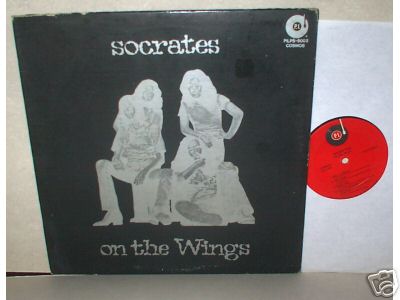
Socrates Drank the Conium - On the Wings (1973)

athensguide.com:
"Socrates will probably never get inducted into the Rock and Roll Hall of Fame. But while other groups were becoming well known in the free world, this Hendrix-style blues band was playing to standing-room-only crowds in a small club in Athens, during Greece's military dictatorship, a period when even Rolling Stone albums were hard to find, and for a time illegal. Socrates sounded like several bands that were popular at the time, Jimi Hendrix Experience, Deep Purple, Blue Cheer, and Black Sabbath come to mind now when I hear their music from that early period, though the majority of their material was original. There were songs that were crowd favorites such as "Close the Door and Lay Down" (or what we called "Do It To The Rythm"), "Starvation" ("Give Them Some Bread") and "Underground", but often the highlight of the evening was when they did their Hendrix songs like "Voodoo Chile", "Message of Love" and "Red House" or jammed on songs like "Kansas City" with singer Jimi Quidd (later of the NY Dots) and Greek-American blues guitarist John Kronis."

rateyourmusic.com:
"This is more like it. A huge boast forward for the Greek cult band. Good production this time as Socrates alter their music just a bit, adding new elements to their hard blues-rock fusion. The band includes progressive and Greek traditional features making their sound more qualitative. Yannis Spathas makes orgies with his guitar, Tourkogiorgis sings like he never did before, and Dukakis and Tradalidis are perfect side-kicks, completing perfect musicianship. Unfortunately though, the fate of this band was never to escape Greek boundaries and therefore met only little success and recognition abroad. Great songs are featured here such as the famous "Death is gonna die" (later known as "Killer" from the Phos album), "Distruction", "Naked Trees" and "Lovesick kid's blues", all crowd favourites, as are all tracks from the album. This is definitely a recording that deserves better respect by music lovers and especially those who claim to like the music of the 70's."

aquariusrecords.org
"Another one for all you fans of '70s proto-metal hard rock. Socrates Drank The Conium were a Greek band, and "On The Wings" was their third album, originally issued in 1973. Psychedelic hard blues rock with ragged, rough-edged English vocals, and -- this is key -- UTTERLY RIPPING twin electric guitar. Definitely an early milestone in heavy acid rock guitar shred. Vangelis later joined this band, but you'd never guess there was any New Age connection from this kick ass album. The songs twist and snake around, with rockin' and doomy riffs, dual guitar harmonies, and crazy leads -- both guitarists playing entirely different, complex licks that somehow meld perfectly. Brilliant stuff. Kinda progressive and utterly powerful. None other than Julian Cope has described this as sounding "a lot like SABBATH VOLUME 4 with Family's Roger Chapman singing".

http://lix.in/a269e9

Socrates Drank the Conium - Death is Gonna Die


20070619

Stark Naked (1971)

The sole album from this Levittown, Long Island (NY) quintet is an interesting amalgamation of prog, hard rock and psych. The lengthy opener, “All of Them Witches” appears to be a thinly-veiled anti-drug song, whose lyrics can be interpreted as a symbolic diatribe about the vocalist’s heroin-ravaged friends. And if I’m not mistaken, I’d swear The Dictators borrowed Richard Belsky’s lead guitar riff for “Minnesota Strip.” Of course, Belsky, himself, seems to have gained a ton of inspiration from the contemporary (the album was released on RCA in 1971) heavy metal riffage of Black Sabbath’s Tony Iommi. The band were also known for their elaborate, pyrotechnical stage presentations, later emulated by the like of KISS and Alice Cooper.

Another plus is Belsky’s nasty guitar solos, which are vicious, but thankfully don’t succumb to the period’s typical sin of overindulgence. Side One concludes with both sides of the band’s lone single, “Done,” which are also presented as bonus tracks in their original (tighter and shorter by almost half) mono mixes. Unfortunately, they’re nothing to write home about, aside from keyboardist Paul Venier’s elaborate solo arrangements, which may appeal to Yes and Asia fans. Female vocalist, Lyne Bunn takes the mic on the flip, “Sins,” which she co-wrote with Belsky, and which is also a typical early-70’s bar band rocker, with Belsky’s guitar runs a little more flamboyant this time around. Unfortunately for the band, the single (and album itself) failed to sell and that, coupled with allegations that the band’s manager absconded with all their funds while they were on the road, led to the band’s premature demise. Perhaps they would have had better luck if they opted instead to issue the tender, dreamy ballad, “Wasted Time,” which once again features Belsky’s tasty guitar solos married to Venier’s Pink Floydian, wah-wah keyboard flourishes. It’s easily the album’s best track.

Still, fans of 70’s hard rock may get a few spins out of the epic side two opener, the 11+ minute, “Look Again,” which opens with Venier’s ruminating solo, a la Jethro Tull’s “Locomotive Breath.” And although the setup is rather weak and uncertain, the ensuing 5-minute jam highlighted once again by Belsky’s mouthwatering soloing and drummer, John Fragos’ voracious skinpounding, is almost worth the price of admission.

Overall, the album will appeal to fans of early 70s’ hard rock with that “local bar band” feel. I’m sure we’ve all encountered bands like this in our own neck of the woods back in the day, so there’s a nice nostalgic buzz going for it, although Venier’s vocals could use a little polish – they occasionally alternate between flat and off key. (review via Foxy Digitalis) (BUY IT!)

link

alt. link

Stark Naked - Iceberg


20070410

Haystacks Balboa (1969)

(reissue AKA "Detoxified")

"Real heavy dudes with a mean attitude and some wicked guitar - above-par hard rock. A couple of tracks on their album were written by Larry West, formerly of the legendary Vagrants and younger brother of guitar colossus, Leslie 'Mountain' West. The album was produced by Shadow Morton, aka Shadow Mann. Mayo and Polott still play together in an outfit called Blue Lagoon." (via Fuzz, Acid & Flowers)

"Early British hard-rock band with some progressive ideas, who released one self titled album in 69. The hard rock tunes are typical of the time, like Sabbath or Mountain, with backbreaking heavy fuzzy guitars and satanic lyrics. The progressive moments are quite nice, long tracks relying on Hammond organ and guitar interplay with extended instrumental stretches." (via gepr.net)

"Q: Where did the band's name come from?

A: Back in the 60's there was a 400 pound wrestler named Haystacks Calhoun. Mark Mayo hung around with a great local band called the Vagrants, Leslie West (Mountain) was the guitarist. One of the Vagrants friends, Bobby Pace, coined the phrase Haystacks Balboa, probably in reference to Mayo's large size at the time. He and Leslie were "look alikes" and people always compared them...similar look and guitar style, and they were often together. So, when we looked for a name, in that drug infused era, Haystacks Balboa jumped out at us. This is how I remember it." (interview with Mark Polott, bass)

link

alt. link

Haystacks Balboa - Spoiler


20080305

Ezy Meat - Not For Wimps (1984)

Ezy Meat, one of the New Wave of British Heavy Metal's lesser-known (but more humorously named) Irish contenders, was formed in the northern capital of Belfast, circa 1980, by brothers Paul (vocals, bass) and Ivan Lavery (vocals, guitar) with drummer Ray McKenna. Attuned to both their country's '70s hard rock heritage (Rory Gallagher, Thin Lizzy, etc.) and the N.W.O.B.H.M.'s new breed of bands, the trio labored in obscurity for a number of years (their legendary "Makin' Noise" demo tape doing just that in the hands of underground traders) before finally getting a chance to record a debut album with the help of fellow Irishman and then Dio guitarist Vivian Campbell. A longtime friend and supporter of Ezy Meat, having first cut his teeth with fellow Belfast N.W.O.B.H.M. group Sweet Savage, Campbell produced the disc over the course of a mere two days, but no matter its abundant energy and some excellent songs, there was little success to be had when it had to be released by the band's own label. Two years later, Ezy Meat still faced this same predicament, and their second self-financed LP, 1986's Rock Your Brains, saw them wavering between a more straightforward hard rock sound (reminiscent of neighborhood pals Mama's Boys) and Rush-inspired prog epics covering entire album sides! The end was drawing near, and after marking 1987 with a positively atrocious new single called "Warrior" (for the Ebony Records Rock Meets Metal II compilation), Ezy Meat quietly wound down their activities. (allmusic)

***


20070629

Toad - Open Fire: Live in Basel (Switzerland 1972)

For those new to Toad, Switzerland's most celebrated hard rock band, and thoroughly confused by the eclectic music encased within Akama's Behind the Wheels, all things are made clear with the solid slab of stage sound emanating from Open Fire Live in Basel 1972. The sleeve notes are equally up-front about the source of this release: a tape bootlegged at the gig. But judging by the quality of the sound -- a tad muddy in places but surprisingly good overall -- this was presumably taken straight off the mixing board. The CD seems to pick up some way into Toad's set, as they launch into the epic, almost 15-minute "Tomorrow Blue," and R&B was where the trio's hearts were, even as the rhythm section boogied straight into hard rock and guitarist Vittorio Vergeat flickered into metal. "Blues," too, heaves its way from undiluted 12-bar blues into the power raging R&B-inflected rock that defined the likes of Cream, early Led Zeppelin, and other Brit rockers raised on the blues but determined to drag the genre into the modern age. Sometimes they squall into a bit of an ominous noisefest à la Black Sabbath, as "Thoughts" illustrates, or into virtuoso braggadocio, as on "Pig's Walk," where Vergeat attempts to out-flash Jimi Hendrix, a delusion shared by every guitarist of the day. Toad could never beat Hendrix at his own game, but they definitely show they're experienced across the two Hendrix covers that close out the set. "Red House"'s R&B roots are showcased to a shine, while "Who Knows" gets equally sumptuous treatment, and although neither is that far removed from the original, both give the bandmembers plenty of opportunity to strut their stuff. Being Swiss, Toad would never garner the success of their British counterparts, but in many ways the trio more effectively melded the blues to rock than any of that island's more favored sons. (allmusic) (BUY IT!)

link

alt. link

20060829

Spot (1972)

dprp.net:

"Another Swiss band I had never heard of. Different from most other re-issues on Black Rills Records, this band Spot is older and much more influenced by the blues and rock from the late Sixties. Now that's one of my favourite cups of tea... The singer plays keyboards as well, in a more accompanying role, not very upfront or soloing. Now I mentioned the singer, I must also add that he has a great blues voice. Raw, but could have used some more power. Still fits the music well.

Strange perhaps, but some of the vocal melodies remind me of the early Moody Blues. I mean the mysterious, moody, bluesy (what's in a name...) and melancholic Moody Blues. Spot are heavier, though. More blues and more rock. Other vocal lines are definitely more blues / (hard) rock, like Led Zeppelin (as in Free, but especially in Portobello). Lots of wah-wah guitar, distorted guitar - Cream and Hendrix influences. But there's also an easier side to the music, as in In My Dreams, which has a great Spirit and Doors feel to it. Or a bit of Deep Purple or Mountain in Oh What A Day.

Spot are really like the more original progressive blues bands than your ordinary Blue Cheer hard rock or something. Songs really evolve, change. Rough, bluesy, rocking. And listen to that marvellous version of Sabre Dance... You might not know the title, but the music you do... Great, driving version, menacing atmosphere.

The production is not very well. The original recordings are from 1972, and definitely not done in a great recording facility with immense budgets. But due to the kind of music, this is not a bad thing. Had this band got a better chance in the international music world, they surely would have recorded more albums. I like this kind of music very much - they refer to a lot of my favourite bands from those days. OK, I can mention a lot of bands they sound like, but it's more like bits sound like this, other bits sound like that. It's not that complete songs sound very much like this or that band. It's a great mix, a bit like Steve Morse's latest solo album, Major Impacts: an ode to all those great bands. Spot recorded their album in a time when those bands were still active, or had just stopped for one reason or another... If you like even a couple of the bands I just mentioned, you should have a listen." link in comments (buy it)

Spot - Who Are You


20070807

Billy Bond y la Pesada - Volumen 3 - Tontos (Argentina 1972)

"Argentina's rock scene remained fairly underground and didn't thrive a whole lot in terms of homeland awareness until after the Falklands War in the 1980's when the government banned English-speaking music from radio, causing the focus to shift on the country's own scene, finally getting some musicians paid. But the British influence had already seeped in to its foundation via the assorted Beatles-worshippers and burgeoning 1960's Beat scenes in Buenos Aires and also Uruguay (whose Los Shakers were a huge influence around South America). As time progressed, the hard rock/psych scene was throwing down fully in the early 1970's: groups like Pescado Rabioso, Almendra and Kubero Diaz getting into prog realm while keeping it still primitive and powerful. Early records by Billy Bond y la Pesada del Rock and Roll (translated: "the heavy guys of rock and roll"!) sported some especially killer jams, with violinist Jorge Pinchevsky (who'd later play with Gong) jumping on board for their second album. When Bond played an outdoor Buenos Aires festival in 1972, police harrassed audience members who were moving up from the cheaper seats to the empty closer seats (at Bond's urging) and the band motivated the fans to smash the place up. The musical result of this experience was a weird, experimental opera called Tontos (1973)." (via WFMU)

"This event was the basis of the following La Pesada album: Tontos released later that year (1972). The foldout red cover (meaning blood) only read "Tontos (operita). 20 de octubre de 1972 + por Billy Bond y la Pesada del Rock - Volúmen 3. Había una vez..." ("Fools (little opera). October 20th, 1972 + by Billy Bond and the Heavy Guys of Rock - Volume 3. Once upon a time..."). Once again, Billy was showing off his ironic sense of humour! But the record, an uninspired experimental piece of nonsense, had only one real song -the superb angry rocker "Tontos"- surrounded by noises and tape effects.

The group was immortalised performing an even wilder version of "Tontos" on the movie Rock hasta que se ponga el Sol, filmed live during the BARock Festival. Bond was savage at the vocals and Gabis at his best. Unfortunately, being on a different label, the song was not included on the movie soundtrack LP." (via Magicland)

link

alt. link


20061025

Cain - A Pound of Flesh (1975)

"Heavy in the same regions as Truth And Janey,Tinhouse, Stepson, Highway Robbery and a dozen of other great US combos that never got a fair share of attention in the first place. Great guitarwork, awesome arrangements and pretty tight and perfect production, its a good package in all sections. The best moments here is the heavier and more moody material Katy and Badside those have a intense power and have awesome dynamics, Heed The Call is another, a great progressive hitter and the emotional All My Life that is very effective."

"For the most part, Cain is pure classic guitar rock...their sound is somewhere between Grand Funk, Mountain and the Doobie Brothers. The classic/blues guitar sounds of the seventies just bleeds through all over this CD, and the tones are classic and unbelievable...it`s just so hard to think that this has been around this long and I haven`t ever heard these guys before."

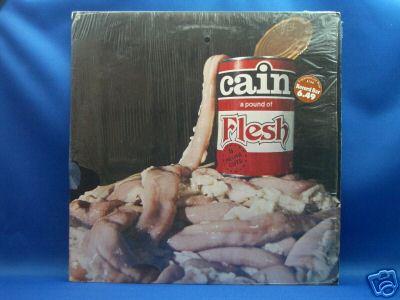
"Truth is, if you like obscurities like Poobah, Amulet or Target or even more known greats like early Zep, Aerosmith or Starz, this is the kind of hard rock classic that stands with the best. From the opening catchy scorcher of "Queen Of The Night" through the 8-minute epic "All My Life," this sucker is a study in memorable songs, killer vocals by Jiggs Lee & of course, devastating lead guitar work by Lloyd Forsberg. Seriously, this Lloyd cat opens up all the 6-string jets he can find on massive guitar-laden chunks of heaven like "Badside" & "Born On The Wind" to the point that you think he's got some howling friction burns on every fret-finger. Absolute top-shelf '70's hard rock that stands with all the big boys, and the icing on the cake is the absolutely sick cover art! Gorgeous stuff!"

http://lix.in/809b41

Cain - Queen of the Night